Developing an Interactive Augmented Reality Application for Exploring Malaysian Flowers: Learning in Bloom
Keywords:
Augmented reality, mobile application, botanical education, 3D visualisation, ADDIE ModelAbstract
Traditional botanical education in Malaysia relies primarily on passive instructional resources, contributing to plant blindness, a generational knowledge gap, and difficulty distinguishing native from non-native floral species. Objective: This study evaluated the Learning in Bloom mobile augmented reality (AR) application to assess its effectiveness in improving floral care knowledge, identifying agricultural information-access challenges, and promoting environmental awareness among users. Method: Guided by the ADDIE instructional design framework, the application paired physical QR-code learning cards with interactive three-dimensional models of five Malaysian flower species built on the Assembler platform. Usability and satisfaction were evaluated through a post-interaction survey of fifty-one respondents. Key Results: 68.6% of participants initially lacked confidence in their local botanical knowledge; following interaction, 74.5% preferred visual and interactive botanical content, 80.4% expressed high interest in regional flora, and 92.1% reported that studying flowers improved their respect for the natural world. Conclusion: The Learning in Bloom application offers an engaging digital environment that increases interest in and appreciation of local biodiversity, although its content currently covers only basic botanical facts due to development constraints.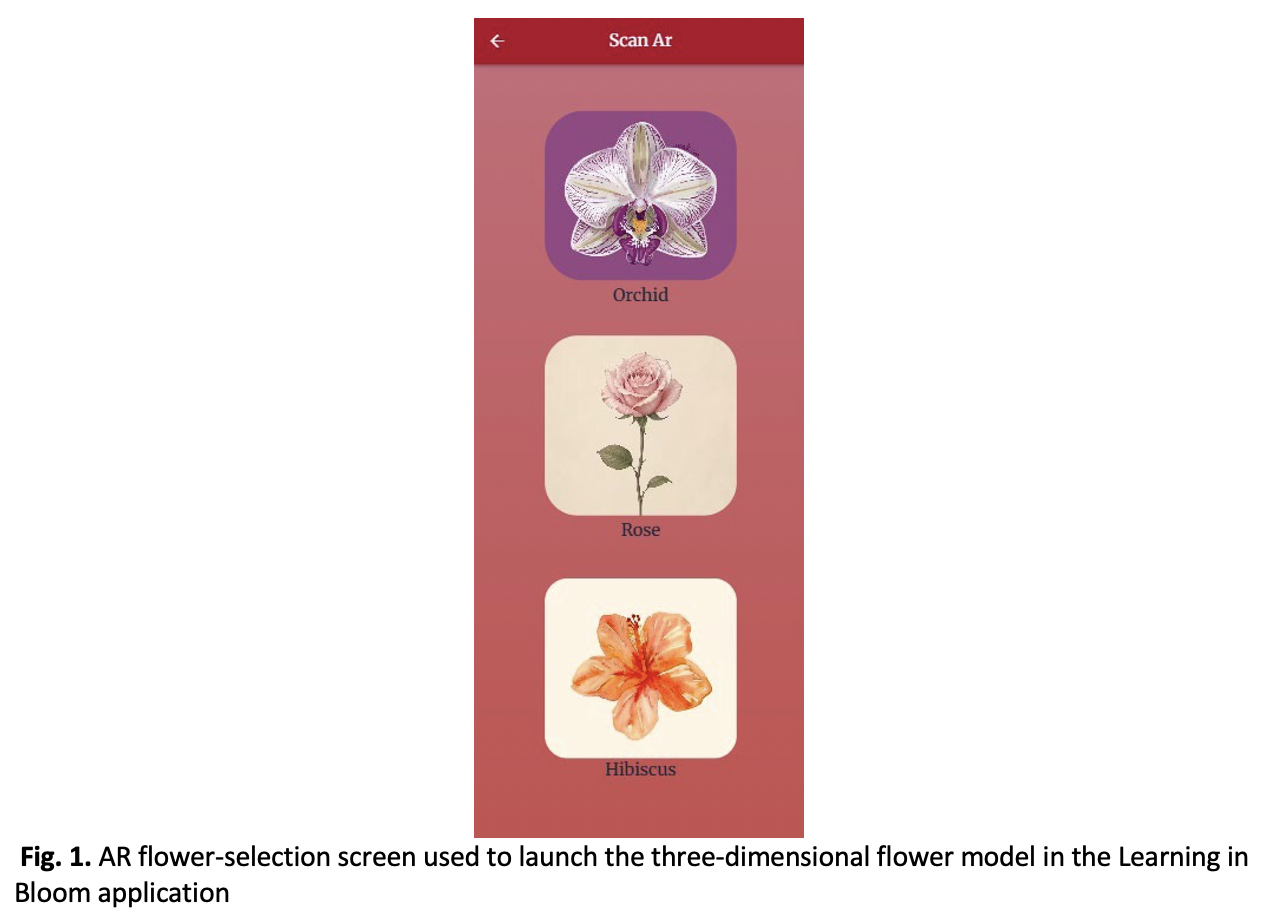
Downloads
Published
2026-10-10
How to Cite
Nur Munirah Mohd Azuan, & Izzul Iman Suhairi. (2026). Developing an Interactive Augmented Reality Application for Exploring Malaysian Flowers: Learning in Bloom. Pena Modern Practices in Teaching and Learning , 5(1), 1–10. Retrieved from https://penacendekia.com.my/index.php/pmptl/article/view/120
Issue
Section
Articles